Homemade braised pork without blanching water and oil

I released this recipe for braised pork in 2014. After tens of thousands of people have cooked it, it still maintains a high score. Thank you for your love! In fact, it is a very traditional method. Many friends mentioned in the comments that the elders at home also do this with braised pork. In 2014, this recipe was still very rudimentary, without a step-by-step diagram. It was 2020 when I wrote this paragraph. This time I especially recorded the process photos to improve the recipe and make some additional revisions by the way.
There are thousands of stewed pork recipes, and each family has their own customary practices. I searched around in the lower kitchen and turned a few pages roughly, but I didn't find the braised pork that I did in my daily life, so I recorded my own version.
To sum it up, I make braised pork, one is not blanching, the other is no oil, and the third is not fried with sugar (or: not especially fried with sugar). It’s done in one pan from start to finish, and there is no need to fry this one first, then fry the other one, and then pour the meat out, saving trouble.
Not blanching, which means that the meat is not boiled in water first. Some people are sensitive to the smell, or the quality of pork is not good enough, if the fishy smell is very strong, of course, you can also choose to blanch first. There is really no need to quarrel, and there is no need to criticize the Zhuoshui School for saying that they are not authentic. Just make a dish, as long as it tastes delicious. If you are used to blanching water and don’t worry about it, put cold water into the pot, put ginger slices, rice wine, or cooking wine, boil the froth and remove it to drain. If you don't blanch it, you can completely soak the meat in clean water to get blood.
Without oil, it means that without pouring oil in the pan, the fried pork is directly heated, and the fat in the meat is forced out, and a lot of oil will naturally flow out. This also reduces the greasiness.
There is no salt in this recipe, so the saltiness of soy sauce is enough for me. Different brands of soy sauce, various light soy sauces, and dark soy sauces have differences in color and saltiness. Please try it while you are doing it. If you think it is not enough, you can add it. The same is true for sweetness.
The big spoon refers to the traditional porcelain spoon for soup. I will write down the tips for other things that come to mind. Please also read the entire recipe.
material
| 700 grams | |
| Ten grains of small grains | |
| 4 slices | |
| 1-2 (can not be put) | |
| 2-3 pieces (can not be put) | |
| 1 (can not be put) | |
| 2 tablespoons | |
| 2 tablespoons | |
| 2 tablespoons | |
| No meat |
Homemade braised pork without blanching water and oil
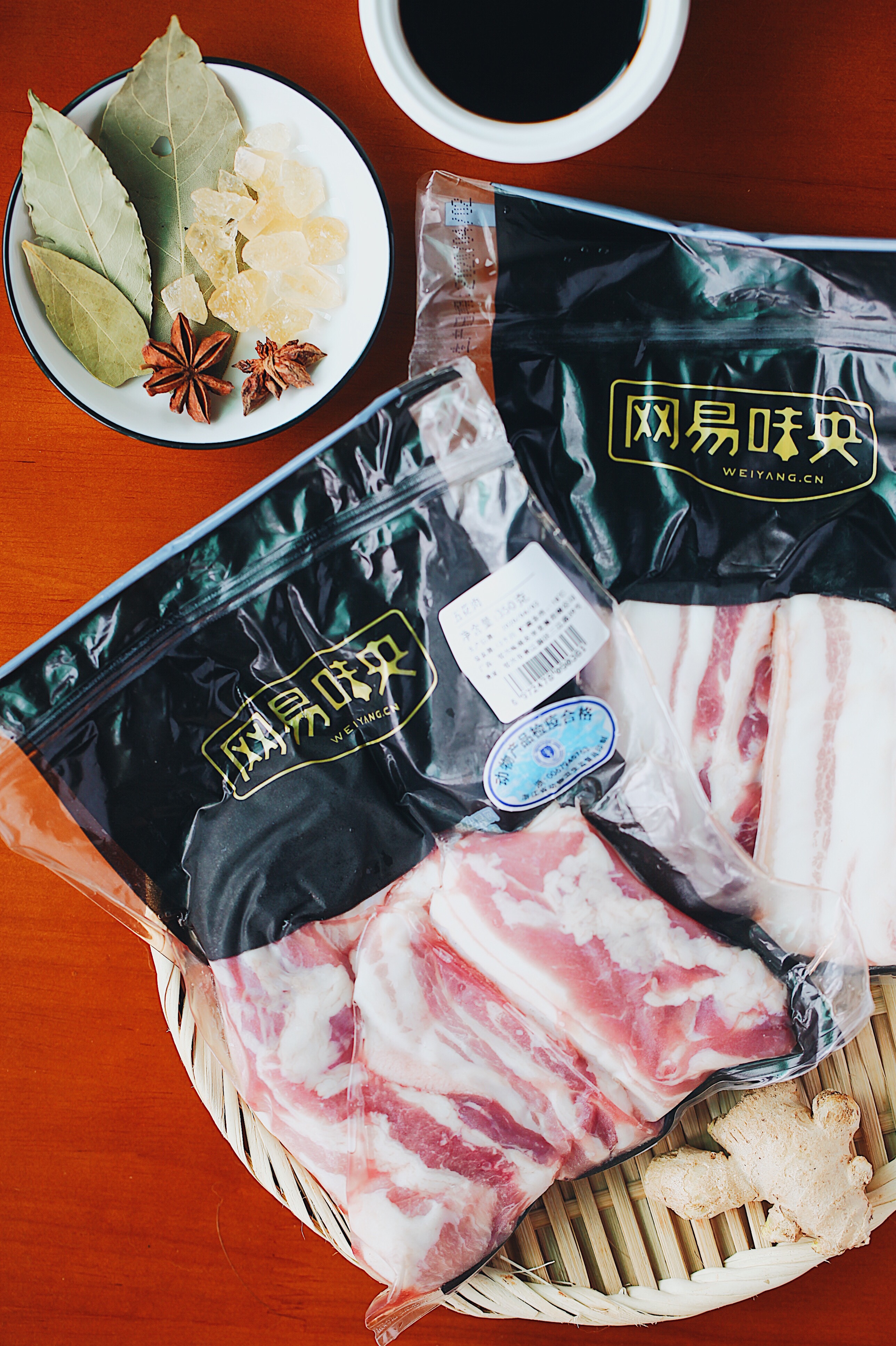
Prepare the ingredients. If it is frozen pork belly, defrost it in advance. I use Netease Weiyang black pork. Slice the ginger well. The dark soy sauce and light soy sauce are both soy sauce. The dark soy sauce is colored and the light soy sauce is seasoned. Of course, if your family is accustomed to using only one type of soy sauce, it does not distinguish between the soy sauce. Now there is a special braised soy sauce, too. It's just that the color and saltiness are really different, so you need to adjust them flexibly. This recipe is just to provide a procedure.
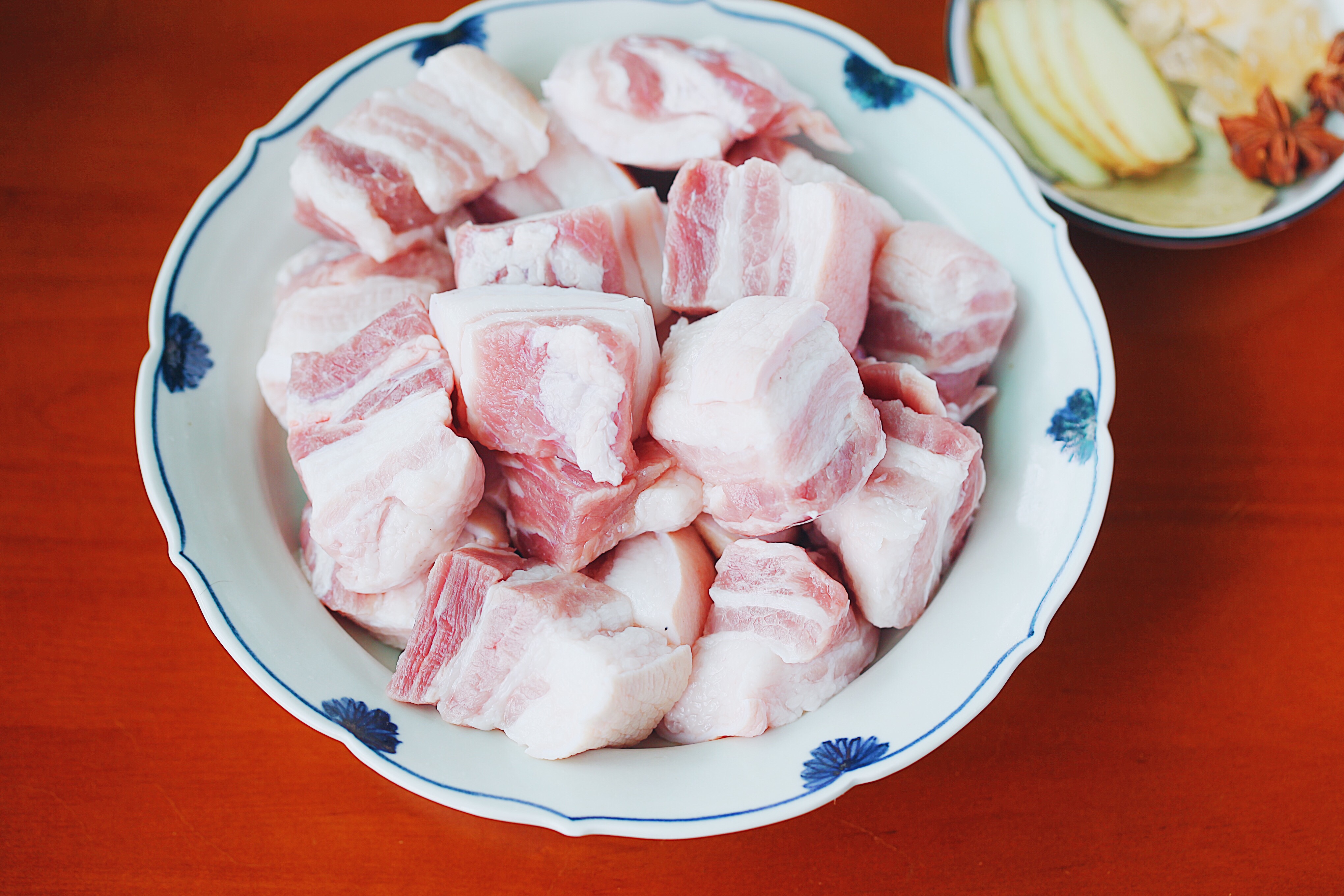
Choose the pork belly with skin, wash it, and change the water several times when washing it, until no more blood seeps out. To control the moisture, it is best to use a kitchen paper towel to dry the surface. Cut into mahjong pieces. It is recommended that you start to boil a pot of water at this time and use boiling water to stew the meat later.
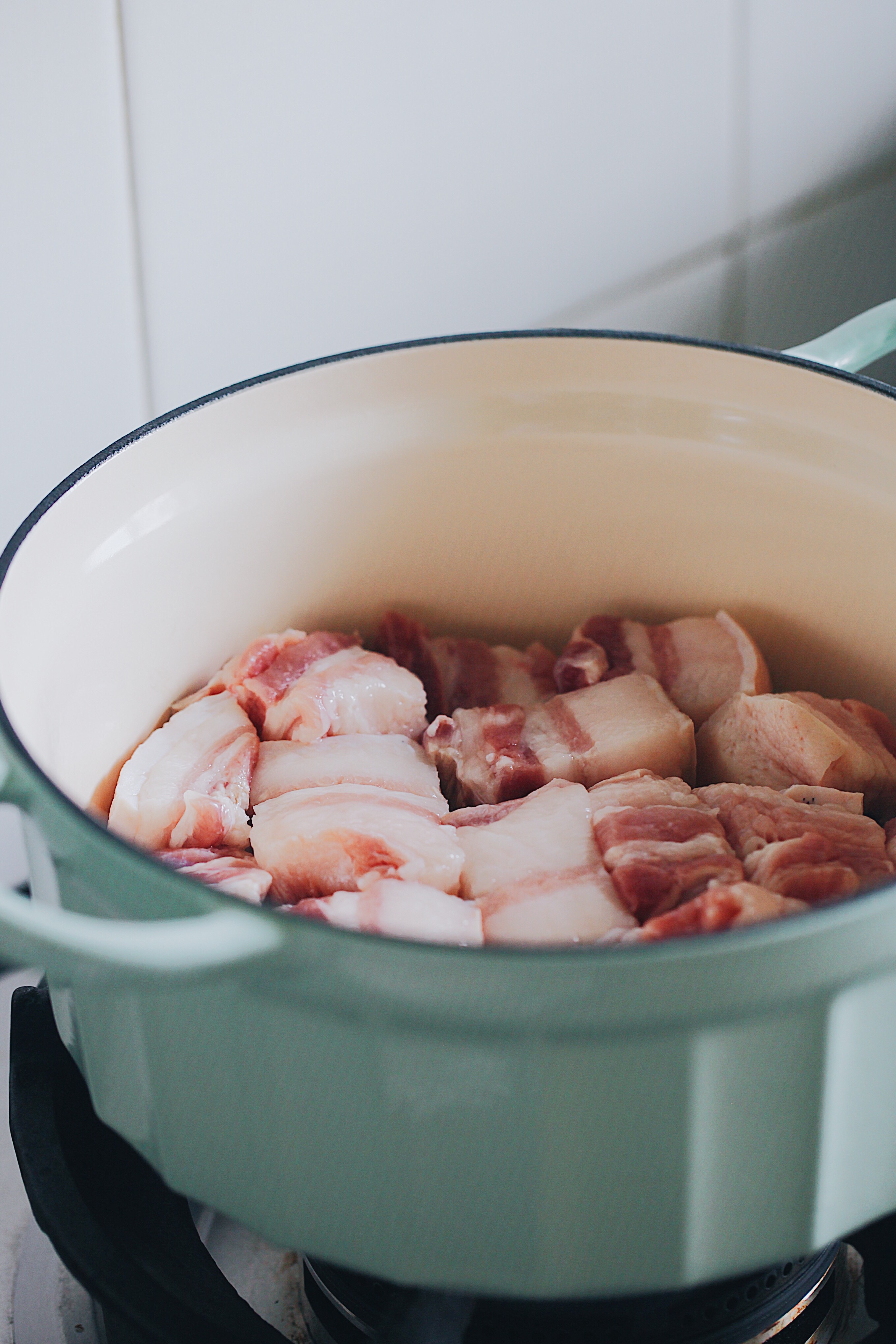
First heat the pot without oil, put the pork belly. Try not to overlap, each piece of meat sticks to the bottom of the pot. Don't turn it in a hurry, it will definitely not turn at the beginning, it will stick to the pan. Slowly fry on low heat and turn over when the oil leaks out.
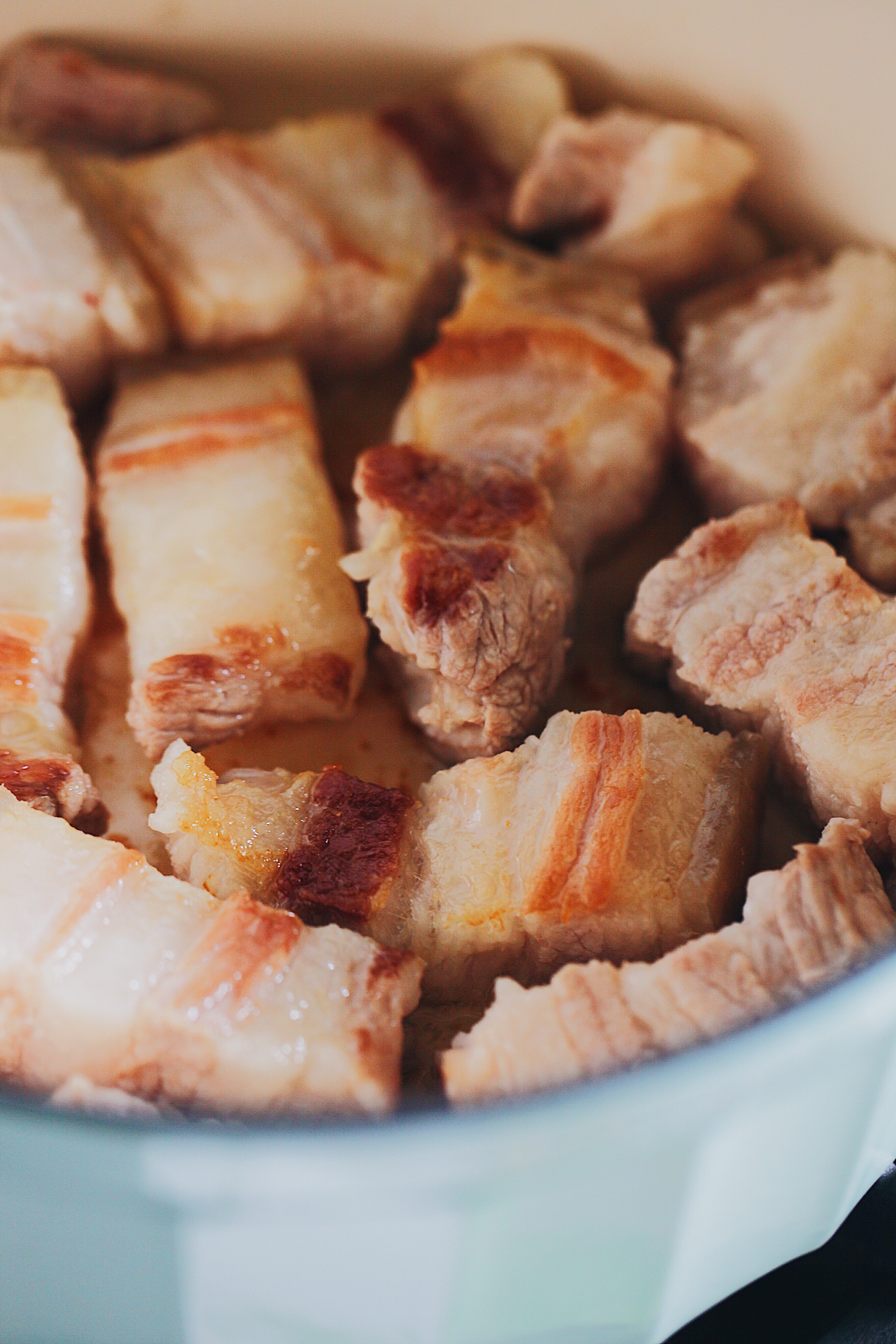
Keep the fire low, turn each piece of meat with chopsticks until the surface is slightly browned and the oil is forced out. But don't fry for too long, the meat will be hard. There is a very similar process in western food. This is often done when frying the meat steak so that the surface of the meat "browns" to seal the gravy.
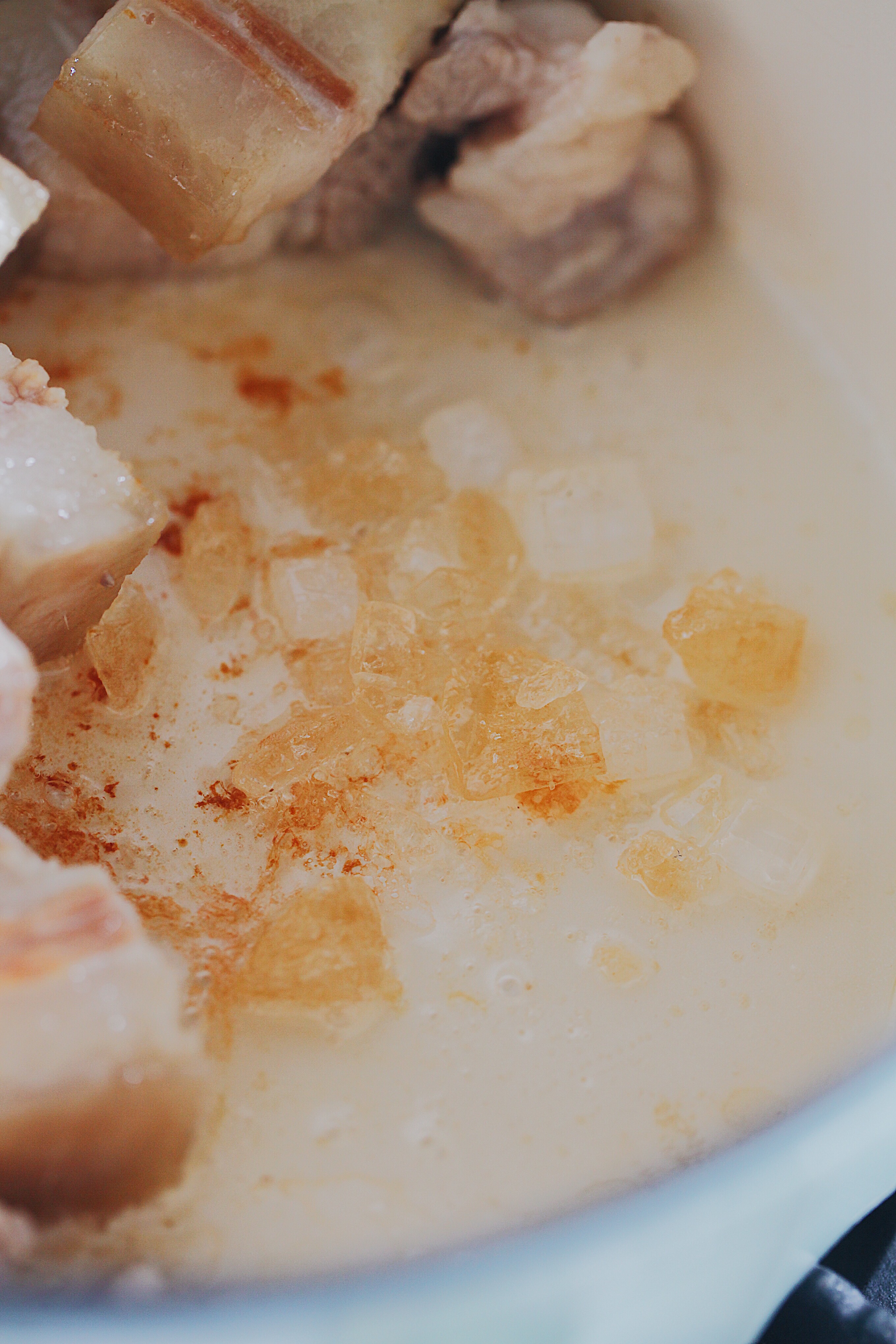
Then add rock sugar, place it in a place with a lot of oil, stir fry for a while on low heat, and stir fry with the whole pot of meat. Use small rock candy, and break the big one into pieces first, otherwise, it will be difficult to melt. This is similar to fried sugar color, but not fried sugar color. If you want to sauté the meat well, but the meat out first, leave the oil in the pot, add the rock sugar and keep stirring on low heat until it is all melted and bubbling, then pour the meat back and stir fry quickly Evenly. Be careful not to over-fry, it will cause bitterness. I don't fry the sugar color like this. When the meat is in the pot, I add rock sugar directly and fry it together. The color of the finished product is the same as oily and red.
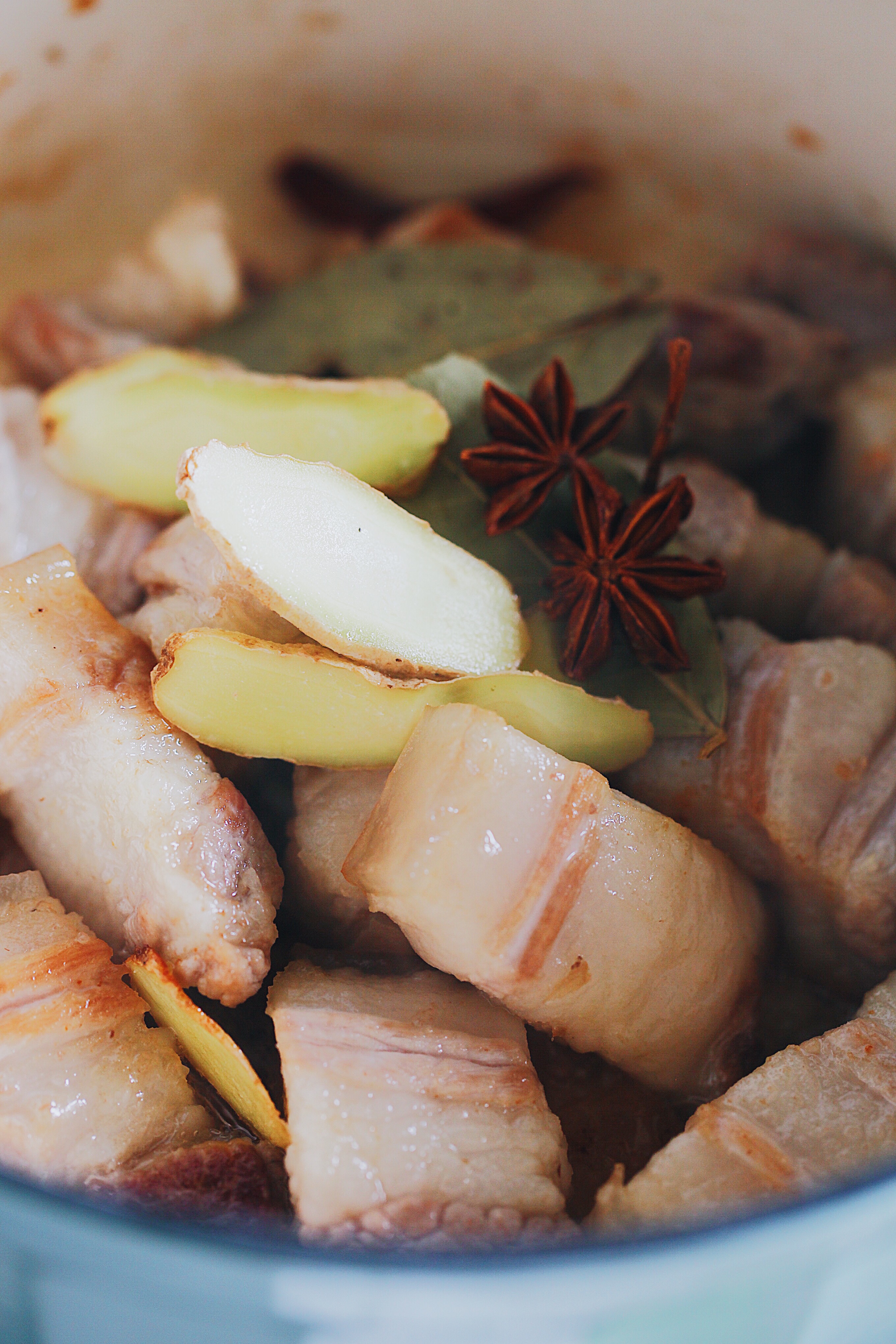
When the rock sugar is almost melted, add sliced ginger, star anise, bay leaves, and dried chili and stir fry a few times. The dried chili can be left alone, but I think it has a slightly spicy taste, which is quite greasy. Star anise and bay leaves are also not put by many people. Anyway. I like some spice, so I will put it. But don't put too much.
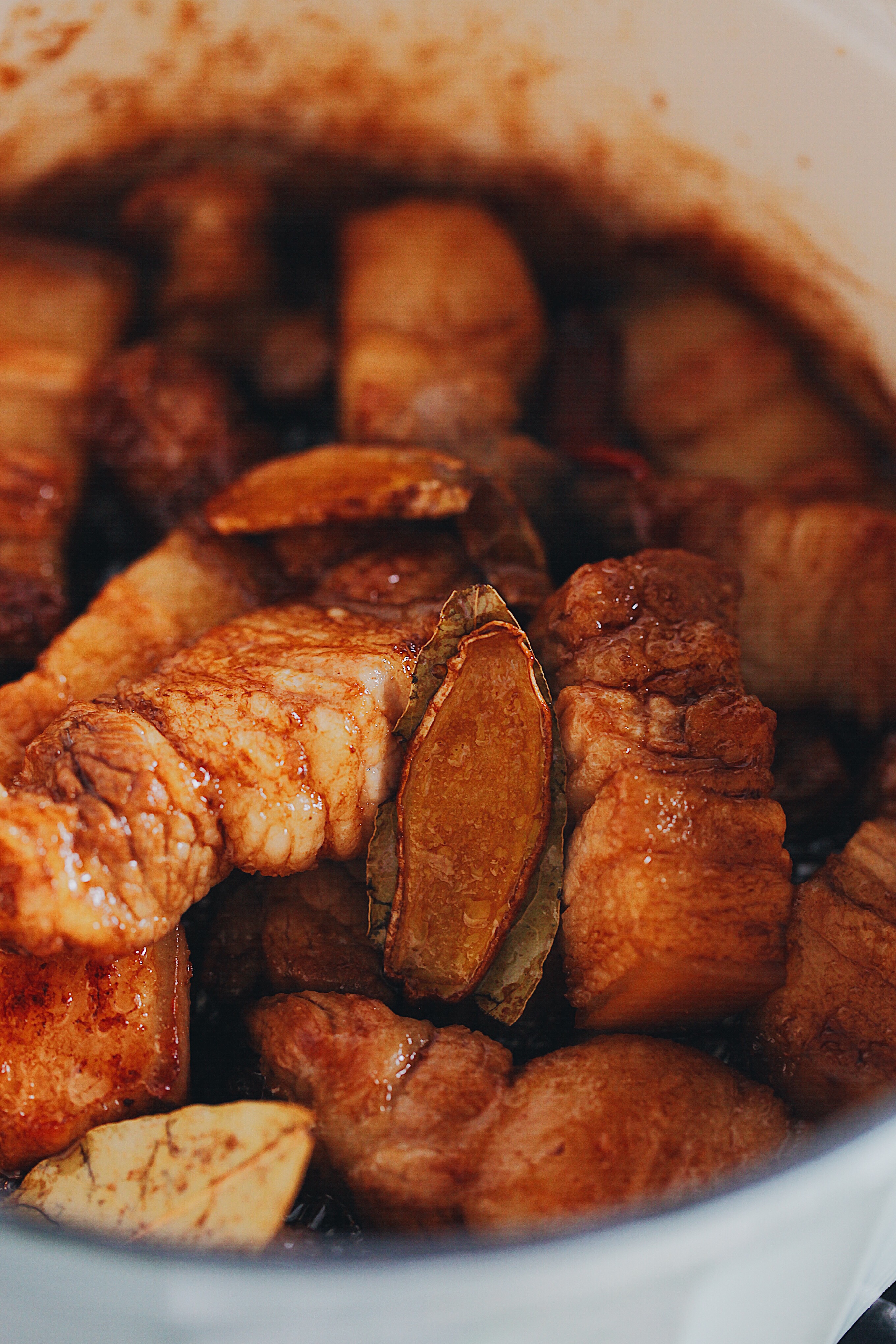
Pour into the rice wine, our family used to use Shaoxing Huadiao wine, which is a kind of rice wine. If there is no rice wine, use ordinary cooking wine. When the wine is poured in, it will be heated instantly, and the aroma will be stimulated. Then add soy sauce and light soy sauce. Stir fry until all the meat is colored.
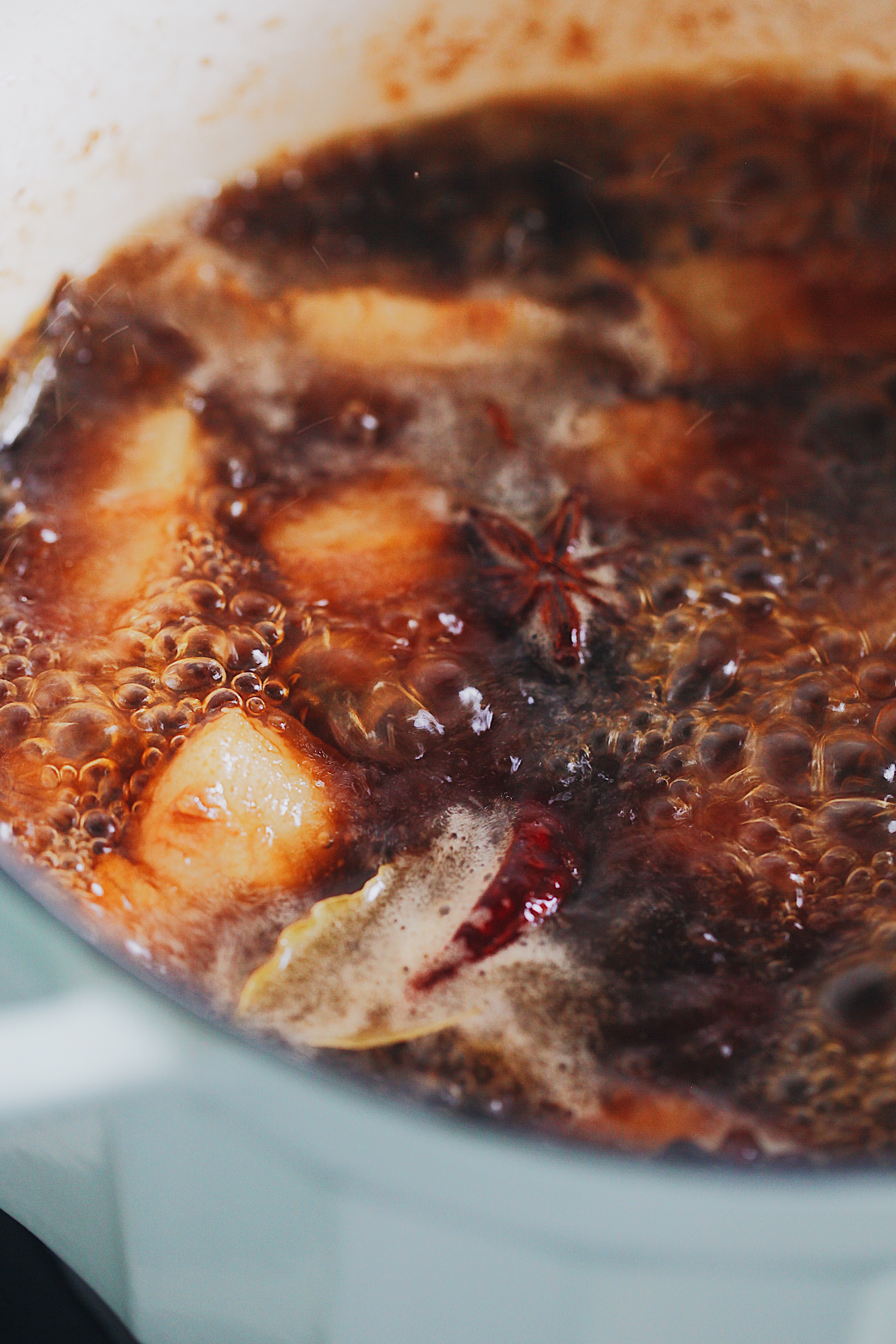
Then pour in boiling water, at least without meat. Note that it must be boiling water, not cold water. When hot meat touches cold water, it shrinks quickly and becomes harder. After pouring in boiling water, bring to a boil on high heat, turn to low heat, cover with lid and simmer for 40 minutes to 1 hour. During this period, remember to observe the condition of the soup, if the water is not enough, the meat is not crispy, you can add water appropriately, the same is to add boiling water.
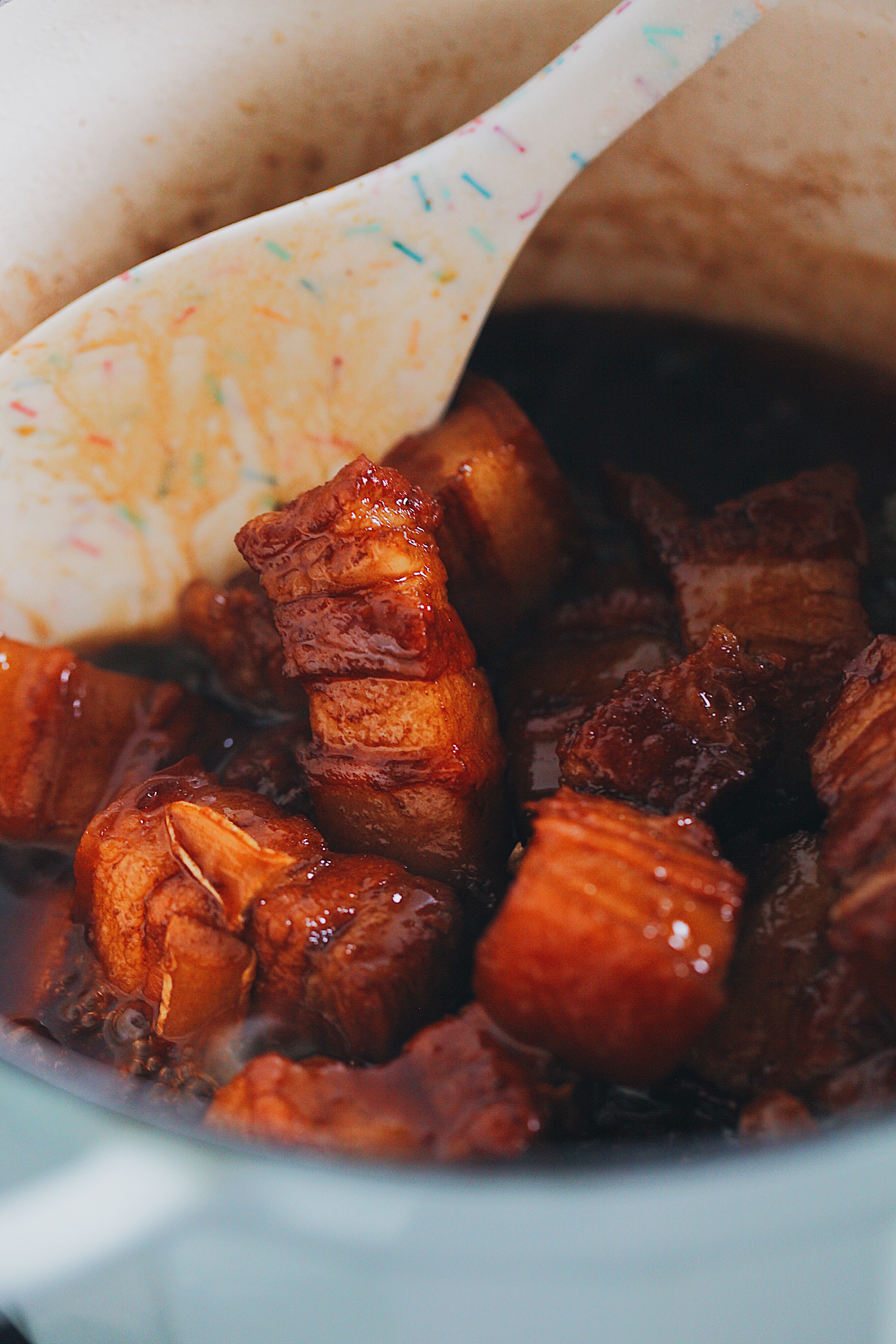
After simmering for enough time, taste the saltiness and meaty taste. If you think it's not enough, let's cook it for a while, but generally, it's enough. You can open the lid and turn to high heat to collect the juice. Pay attention to mixing when collecting the juice. The sauce will thicken if there is sugar in it. The more sugar you put, the thicker the soup will become. The soup can be out of the pot when it is almost collected. Note that the sauce is not boiled, and not to mention it, because when the sauce in the pot is really boiled, only the oil will remain and it will become fried meat, and the meat will be burnt. Therefore, it is necessary to distinguish whether the sauce is colored with soy sauce in the pot. Don't burn the sauce to dryness, just thicken it appropriately. Sprinkle some sesame seeds at the end, which is more pleasing to the eye.
Tips
The specific feeding ratio is only an approximation and is for reference only. Everyone has different tastes, different rock sugar, soy sauce, sweetness, saltiness, and coloring. Taste as you cook, put more rock sugar for sweet ones, and more soy sauce for salty ones. Note that the juice will become saltier after harvesting. Don't put it too salty at first. If you use braised soy sauce, light soy and dark soy sauce can be combined into special braised soy sauce.
If you still want less oil, you can pour out most of the oil after frying the meat at the beginning (it is very fragrant for sautéing vegetables), leaving only a little in the pan for subsequent steps.
The friends in the comment area provided a good way to spray a little vinegar before cooking. You can try it.
Many people ask since it is said to add boiled water and not cold water, can you still use beer? Yes, the enzymes contained in beer have the effect of softening the fiber of the meat, so if you stew with beer, you don't have to stick to the fact that cold water will make the meat hard. It is only recommended to use light beer, otherwise, it may be bitter.


Comments
Post a Comment